2013년 5월 20일 월요일

Suncheon Bay Garden Expo 2013. Flowery Paradise in Suncheon, Korea

  The weather in May is wonderful, and it is very nice to go on a picnic in May, so I went on a trip to Suncheon to enjoy may. The place where I visited was Suncheon bay. There is an expo called "Suncheon Bay Garden Expo," which is being held in Suncheon, located in Jeollanam-do(south Jeolla province), Korea.

  Let's go on a trip to Suncheon Bay Garden Expo.


  This is the map of the Garden Expo. The expo area is very wide, and there are a lot spots to visit. I started my trip from the left side of the river, near the bridge.


  This is Dream Bridge(꿈의 다리). This bridge is over Dong-cheon river, and connects  the left side of expo area to the right one.


  There are Korean phrases such as proverbs on the wall of the bridge.


  Also, there are pictures which elementary school students drew. The pictures seem to show the students' dream.


  After crossing the bridge, I arrived the right part of expo area, which is international garden zone.


  This is the entrance of a Chinese garden.


  I could enjoy Chinese-style architecture.


  Urban Forest area. So green.


  There were a lot of flowers.


   Lugworm Path.


  Down there is called Lugworm Path. the shape of the path is like lugworm.


  The weather was amazing.


  In the Lugworm Path area, there were a few galleries.


  Many flowers were boasting themselves on every streets.


  French garden.


  There was a restaurant in French Garden area.


    Hooded Crane Maze Garden.


    In Rose Garden. Roses were fascinating.


  It is the best time for roses these days, so I could enjoy full blooming roses.


  Pink roses were one of the best.


  There is also a lake, and there is a hill on the lake. The Korean letter which means "dream" in the left side of the photo is impressive.


   There is a deck through the lake.


  Dutch Garden. It was the most popular garden.


  The windmill with flowers was amazing.


  The fountain in the American Garden.


  Metasequoia Path. The metasequoia trees are beautiful.


  Indian-style Garden.


  Italian Garden.


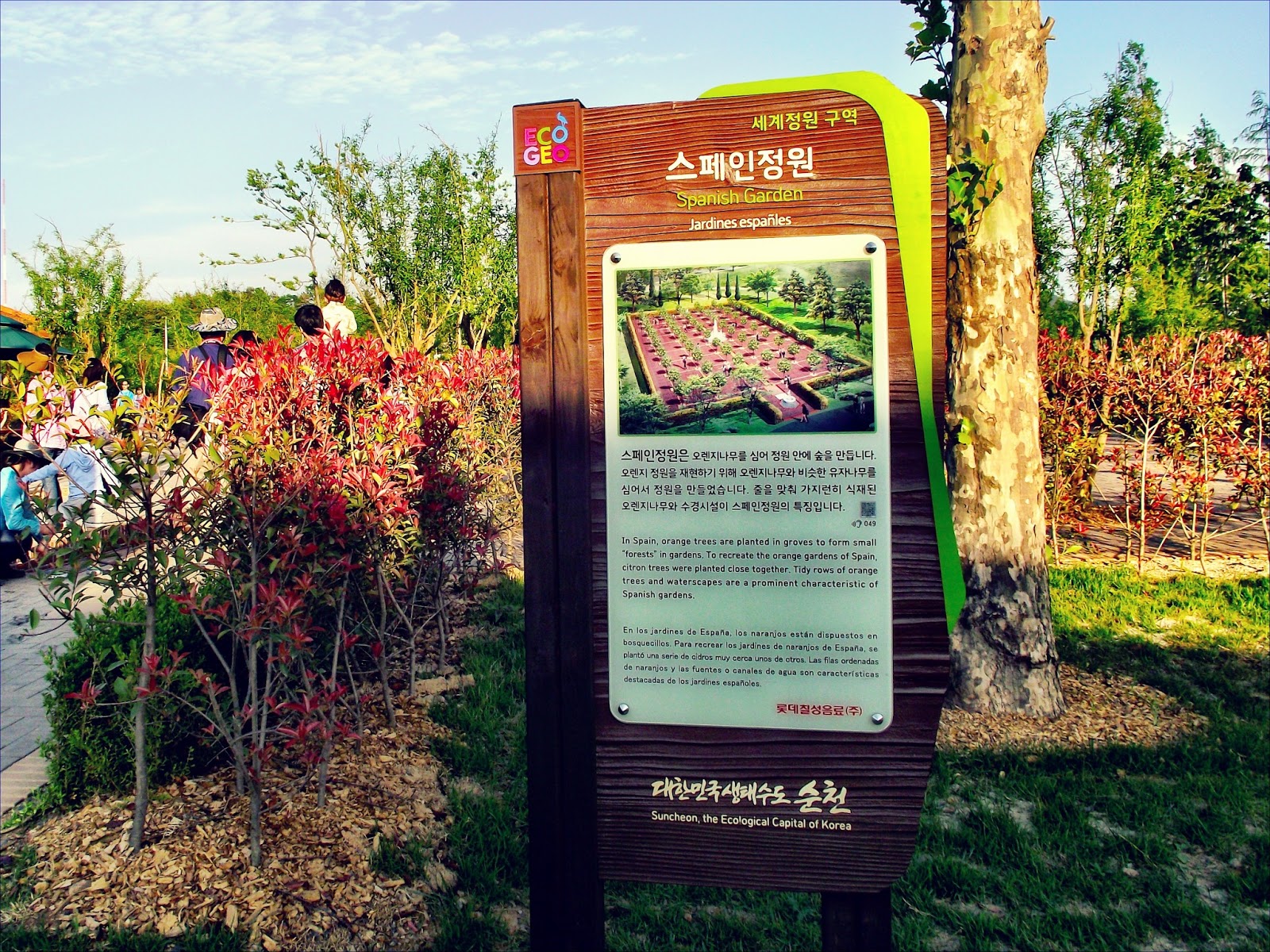
  Entrance of Spain Garden. There are lots of orange trees, but I couldn't see oranges because it is not the best time yet.


  Turkish Garden.


  That is a platanus tree.


  British Garden.


  Japanese Garden.


  a poplar tree. It was my first time to see a poplar tree. The shape is interesting.


  Thai Garden.


  It is very exotic.


  While I was walking around the gardens, time flew like an arrow. After taking a tour of every gardens, I sit near the lake and enjoyed the sunset.


  I had never seen that many flowers at once, in one place before. Taking a tour to Suncheon Bay Garden Expo was a great experience.

2013년 5월 14일 화요일

Too Cheaper and Weaker Japanese Yen, What has happened and what to do?

  These days, Japanese currency, Yen seems strange - it is too cheaper than before. It has been reported that Yen has breached the 100 yen to the US dollar mark for the first time since April 2009, in 6 years. This is not an "extremely" radical decline. The sign of the decline has been shown since last year's November, and the yen has fallen about 25% since then. 25% changes of exchange rate is considerable enough to make influences, so this problem has become a hot topic.


< Fall of Japanese exchange rate > (BBC)


  Why ?

  Then, Why on earth has yen fallen that much? One of the most pivotal reasons is so-called "Abenomics," which refers to Japanese economic policy by the incumbent prime minister of Japan, Shinzo Abe. The main goal of the policy is to resolve deflation problems which continue for about 15 years, and one of the policies, which is "easy money policy," is said to be the main cause of the decline of yen. 

  Someone would ask a question what the easy money policy is. What is it? The easy money policy is based on quantitative easing by which the central bank spreads money and makes the money flow. By easy money policy, the central bank buys financial assets from commercial banks and other private institutions, thus increasing the monetary base. That could relieve deflation because there would be more money supply which is one facter of inflation. However, if there is too much money, the money price would decrease. In this context, Japanese easy money policy has led to cheaper yen.


  What Kinds of Influence ?

  Changes made by weaker yen can be explained by the impacts of depreciation. 

  When there is depreciation of exchange rate, the price of one currency relative to the price of another decreases, so more money needs to be paid to buy foreign currency. In this context, when companies import goods, more money should be paid to import them, and that leads to profit loss. Therefore, importers would become unwilling to import goods. 
  On the other hand, when exporters export goods, the price of goods would be relatively cheap, which makes the goods more competitive. As a result, exporters would enjoy a demand rise of export goods. Those are the most prominent impacts of depreciation. Other than them, it can be said that there would be more travellers from foriegn countries because of cheaper price of currency, so profits of travel industry would rise. 


(Bloodberg)


  Then let's get back to Japenese yen. Nowadays in Japan, importers are suffering from expensive import goods because of depreciation of yen currency, but exporters are smiling because of a demand rise of export goods. In addition, more travellers are visiting Japan because travellers can enjoy cheaper trips thanks to weak Japanese yen. Because of more travellers in Japan, Japanese travel agencies are busy welcoming customers from foreign countries, leading more profits to travel industry.

  It is clear that there are pros and cons of depreciation of Japanese yen, but it is also clear that too much fluctuation of exchange rate doesn't usually lead to advantages but lead to considerably big loss. That's why the news that yen breaches 100 threshold mark against a US dollar is becoming a big issue, and it would be better that such issue should be resolved as soon as possible.


  Solution ?

  Japan is suffering from long-lasting deflation, so Japanese economic policy called Abenomics tries to resolve deflation, but such policy causes weak currency problems, so it seems that detailed solutions which can adjust those two problems at the same time should be made. Japanese prime minister, Abe says that they are considering purchasing foreign debts, but it seems that this plan should be made carefully. 

  When it comes to financial issues, there are both short-term financial issues and long-term financial issues. Resolving what should be resolved right now is important, but I think the most importand thing is considering and dealing with issues in the long run since long-run issues eventually make a biggest impact on economy. I hope Japan would make wise solutions for this problems. Let's watch how Abenomics would work.


references

http://en.wikipedia.org/wiki/Abenomics
http://www.bbc.co.uk/news/business-22279105